Tour de France 2026 Preview
The 2026 Tour de France starts on July 4 in Barcelona and finishes on July 26 in Paris. Across 21 stages and a total distance of 3,321.2 km (2,064 miles), the route is designed to create tension early and become significantly harder in the final week. The race opens with a team time trial, before the Pyrenees, Massif Central, Vosges, Jura and Alps gradually push the favorites to their limits. This guide explains the route, the key stages, the favorites, German riders, jersey battles, TV coverage and live streaming options.
Quick Summary: Key Facts About the 2026 Tour de France
- The 2026 Tour de France takes place from July 4 to July 26 and covers 21 stages over a total distance of 3,321.2 km (2,064.8 miles).
- The Grand Départ takes place in Barcelona, while the race traditionally finishes on the Champs-Élysées in Paris.
- The race opens with a team time trial — a format that can create early gaps in the general classification on day one.
- The route runs through the Pyrenees, Massif Central, Vosges, Jura and Alps, making it one of the most varied routes in recent years.
- The riders face five summit finishes and an individual time trial in the third week.
- The hardest stages are deliberately placed late in the race, which should keep the battle for the Yellow Jersey open for a long time.
- This guide includes the complete stage overview, a route analysis, the main favorites and all key information on TV coverage.
The 2026 Tour de France at a Glance
| Dates | July 4 to July 26, 2026 |
| Total distance | 3,321.2 km (2,064.8 miles) |
| Stages | 21 |
| Start | Barcelona, Spain |
| Finish | Paris, Champs-Élysées |
| Rest days | 2 |
| Time trials | 1 team time trial, 1 individual time trial |
| Stage profile | 7 flat stages, 4 hilly stages, 8 mountain stages |
| Summit finishes | 5 |
What Makes the 2026 Tour de France Special?
In 2026, the organizers are relying less on one single spectacular moment and more on a steadily increasing level of difficulty. The team time trial in Barcelona can already create early gaps between the favorites before the route moves through several mid-mountain regions and into the high mountains.
The decisive attacks on the Yellow Jersey are still likely to come in the third week. That is when an individual time trial and several demanding Alpine stages meet riders who already have two intense weeks of racing in their legs. This combination makes the 2026 Tour de France a race in which consistency and team strength are likely to matter more than isolated breakaway performances.
The Key Point
The 2026 Tour de France rewards complete Grand Tour riders. Anyone aiming for overall victory must perform in the time trials, stay consistent in the mountains and rely on a strong team over three weeks. This versatility is likely to shape the outcome of the race.
Route and Stages: The Complete Tour Plan
The 2026 Tour de France covers 21 stages and 3,321.2 km (2,064.8 miles) from Barcelona to Paris. The route has a clear structure: a technical opening, early mountain stages, a long middle section with chances for sprinters and breakaway riders — and a demanding Alpine finale.
What stands out most is the mix of time trials and high mountains. The team time trial in Barcelona can already create the first gaps. In the third week, the race features an individual time trial, Orcières-Merlette and two stages finishing on Alpe d’Huez.
Why This Route Is So Intriguing
The 2026 Tour forces the favorites to stay alert early and preserve endurance late. Anyone losing time in Barcelona may already need to respond in the Pyrenees. Anyone investing too much there could pay for it in the Alpine week. That balance makes the route tactically demanding.
All 21 Stages of the 2026 Tour de France at a Glance
| Stage | Date | Start – Finish | Profile | Distance |
|---|---|---|---|---|
| 1 | July 4 | Barcelona – Barcelona | Team Time Trial | 19.6 km (12.2 miles) |
| 2 | July 5 | Tarragona – Barcelona | Hilly | 168.5 km (104.7 miles) |
| 3 | July 6 | Granollers – Les Angles | Mountain | 195.9 km (121.7 miles) |
| 4 | July 7 | Carcassonne – Foix | Hilly | 181.9 km (113.0 miles) |
| 5 | July 8 | Lannemezan – Pau | Flat | 158.3 km (98.4 miles) |
| 6 | July 9 | Pau – Gavarnie-Gèdre | Mountain | 186.2 km (115.7 miles) |
| 7 | July 10 | Hagetmau – Bordeaux | Flat | 175.1 km (108.8 miles) |
| 8 | July 11 | Périgueux – Bergerac | Flat | 180.4 km (112.1 miles) |
| 9 | July 12 | Malemort – Ussel | Hilly | 185.5 km (115.3 miles) |
| 10 | July 14 | Aurillac – Le Lioran | Mountain | 166.6 km (103.5 miles) |
| 11 | July 15 | Vichy – Nevers | Flat | 161.3 km (100.2 miles) |
| 12 | July 16 | Circuit Nevers Magny-Cours – Chalon-sur-Saône | Flat | 179.1 km (111.3 miles) |
| 13 | July 17 | Dole – Belfort | Hilly | 205.8 km (127.9 miles) |
| 14 | July 18 | Mulhouse – Le Markstein Fellering | Mountain | 155.3 km (96.5 miles) |
| 15 | July 19 | Champagnole – Plateau de Solaison | Mountain | 183.9 km (114.3 miles) |
| 16 | July 21 | Évian-les-Bains – Thonon-les-Bains | Individual Time Trial | 26.1 km (16.2 miles) |
| 17 | July 22 | Chambéry – Voiron | Flat | 174.7 km (108.6 miles) |
| 18 | July 23 | Voiron – Orcières-Merlette | Mountain | 185.2 km (115.1 miles) |
| 19 | July 24 | Gap – Alpe d’Huez | Mountain | 127.9 km (79.5 miles) |
| 20 | July 25 | Le Bourg-d’Oisans – Alpe d’Huez | Mountain | 170.9 km (106.2 miles) |
| 21 | July 26 | Thoiry – Paris Champs-Élysées | Flat | 133.0 km (82.6 miles) |
The Key Stages
Stage 1: Team Time Trial in Barcelona
The opening stage is no gentle rollout. Teams with strong time trial setups can gain time immediately, while poorly organized squads may come under pressure on the very first day.
Stage 3: Granollers – Les Angles
The first mountain stage comes unusually early. It does not have to decide the Tour, but it can show which favorites are already stable in week one.
Stage 6: Pau – Gavarnie-Gèdre
This Pyrenean stage is the first major test of endurance. Any favorite showing weakness here may have to race more aggressively for the rest of the Tour.
Stage 16: Individual Time Trial by Lake Geneva
After the second rest day, the individual time trial can reshuffle the general classification. It is especially dangerous for pure climbers who may need to win back time on the following mountain stages.
Stage 20: Le Bourg-d’Oisans – Alpe d’Huez
The penultimate stage is likely to be the most important day of the race. After almost three weeks, the outcome will depend not only on climbing strength, but also on recovery, team support and mental resilience.
Route Analysis: Where Could the Tour Be Decided?
The 2026 Tour de France is unlikely to be decided on one single day. The route is designed to create time gaps at several points: in the team time trial, on the early summit finishes, in the individual time trial and finally in the Alps.
The third week will be especially important. After the individual time trial, Orcières-Merlette and two stages finishing on Alpe d’Huez create three demanding mountain days in quick succession. Anyone who is no longer fresh at that point can lose several minutes, even with a strong team.
For the favorites, this means that simply waiting will probably not be enough. The Tour demands early control, smart energy management and well-timed attacks. The combination of time trials and high mountains strongly favors complete Grand Tour riders rather than specialists.
Favorites for the Overall Victory
As things stand, the battle for the Yellow Jersey at the 2026 Tour de France is expected to come down mainly to a duel between Tadej Pogačar and Jonas Vingegaard. Behind them, the race becomes especially intriguing because Remco Evenepoel, Florian Lipowitz, Paul Seixas and Isaac del Toro all bring different strengths to this mountain-heavy Grand Tour.
This favorites analysis is based on the official Tour de France start list, confirmed team selections and current race previews. Late changes due to injuries, form issues or team decisions remain possible until the start.
Who Is the Top Favorite for Yellow?
Tadej Pogačar starts the 2026 Tour de France as the clear benchmark. He brings the strongest mix of explosiveness, climbing quality, time trial ability and race dominance. Vingegaard remains his most dangerous rival because the route, with long Alpine stages and heavy third-week fatigue, also suits him extremely well.
Favorites Comparison: Strengths, Risks and Winning Chances
| Rider | Team | Strengths | Risk | Assessment |
|---|---|---|---|---|
| Tadej Pogačar | UAE Team Emirates-XRG | Mountains, time trials, attacks, team depth | High expectations, early control required | Top favorite |
| Jonas Vingegaard | Visma | Lease a Bike | Long climbs, recovery, third week | Wout van Aert is not in the Tour team | Main challenger |
| Remco Evenepoel | Red Bull-BORA-hansgrohe | Time trials, pacing, tactical aggression | Heavy Alpine blocks late in the race | Podium contender |
| Florian Lipowitz | Red Bull-BORA-hansgrohe | Climbing, consistency, strong development | Role alongside Evenepoel | Podium outsider |
| Paul Seixas | Decathlon CMA CGM | Climbing talent, lightness, home advantage | Tour debut, pressure in France | Top-10 candidate |
| Isaac del Toro | UAE Team Emirates-XRG | Mountains, dynamism, strong support role | Clear hierarchy behind Pogačar | Elite domestique with his own option |
Pogačar: The Rider Everyone Has to Beat
Pogačar enters the race as defending champion and clear favorite. UAE Team Emirates-XRG has built a strong squad around him, with climbing support and powerful rouleurs for the team time trial. His greatest strength is that he can gain time on almost any terrain.
Vingegaard: The Most Dangerous Rival in Week Three
Vingegaard remains the rider most capable of putting Pogačar under sustained pressure in the mountains. The final week, with Orcières-Merlette and two stages finishing on Alpe d’Huez, suits his profile. The key question is whether Visma can maintain control without Wout van Aert.
Evenepoel and Lipowitz: A Dual Leadership with Risk and Opportunity
Red Bull-BORA-hansgrohe brings two riders with general classification ambitions in Evenepoel and Lipowitz. Evenepoel can gain significant time in the time trials, while Lipowitz looks especially interesting for the long mountain stages. The big question is whether this becomes a tactical weapon or an internal role problem.
Analysis
The route does not favor a pure time trialist or a pure climber. The winner must be able to do both: avoid losing time in the team time trial, stay solid in the individual time trial and still be fresh enough in the Alps to respond to attacks.
That makes Pogačar the logical number one. Vingegaard is the most dangerous challenger if the Tour turns into an endurance battle in the third week. Evenepoel, Lipowitz and Seixas will probably need a perfect race to break up the duel between the two top favorites.
Source Situation
This section is based on the official Tour de France start list, confirmed team selections and current favorites analyses from letour.fr, Cyclingnews, Cycling Weekly and Welt/dpa.
Riders to Watch at the 2026 Tour de France
Beyond the battle for the Yellow Jersey, several riders could shape the story of the 2026 Tour de France. Some are emerging general classification contenders, others are explosive climbers or stage hunters capable of producing memorable performances over the three-week race.
Florian Lipowitz continues his rise among cycling’s elite, while young stars such as Isaac del Toro and Paul Seixas are expected to attract significant attention. Experienced attackers including Georg Steinhauser and Biniam Girmay also have realistic opportunities to animate individual stages.
Which riders could surprise the favorites?
Florian Lipowitz appears ready to establish himself among the world’s best stage racers, while Isaac del Toro and Paul Seixas represent the next generation of Grand Tour contenders. Their performances could become one of the defining storylines of this Tour.
Riders to Watch
| Rider | Team | Why Watch? | Main Objective |
|---|---|---|---|
| Florian Lipowitz | Red Bull-BORA-hansgrohe | Emerging GC contender with impressive climbing consistency. | Top 10 overall, outside podium chance. |
| Isaac del Toro | UAE Team Emirates-XRG | One of cycling’s brightest young talents. | Support Pogačar while pursuing opportunities of his own. |
| Paul Seixas | Decathlon CMA CGM | France’s biggest climbing prospect. | Gain Grand Tour experience and target the White Jersey. |
| Georg Steinhauser | EF Education-EasyPost | Aggressive climber suited to mountain breakaways. | Fight for a stage victory. |
| Biniam Girmay | Intermarché-Wanty | Dangerous on reduced bunch sprints and rolling terrain. | Stage victories and Green Jersey points. |
| Olav Kooij | Team Visma | Lease a Bike | One of the fastest finishers in the peloton. | Sprint stage victories. |
Florian Lipowitz Continues His Rise
After a series of impressive performances in stage races, Lipowitz enters the Tour as one of the most exciting emerging general classification riders. His consistency in the mountains and steady development make him one of the names to follow throughout all three weeks.
The Next Generation Is Arriving
Isaac del Toro and Paul Seixas represent the future of Grand Tour racing. While expectations should remain realistic, both riders have the talent to influence stages, compete for the White Jersey and gain invaluable experience against the sport’s biggest stars.
Watch the Stage Hunters
Not every memorable Tour performance comes from the overall contenders. Riders such as Georg Steinhauser and Biniam Girmay have the ability to animate breakaways, fight for individual stage victories and become fan favorites through aggressive racing.
Selection Notes
This overview is based on the confirmed start list, official team announcements and current rider form ahead of the Grand Départ. Final team selections remain subject to late changes because of injuries, illness or tactical decisions.
Green, Polka Dot and White Jersey: The Leading Contenders
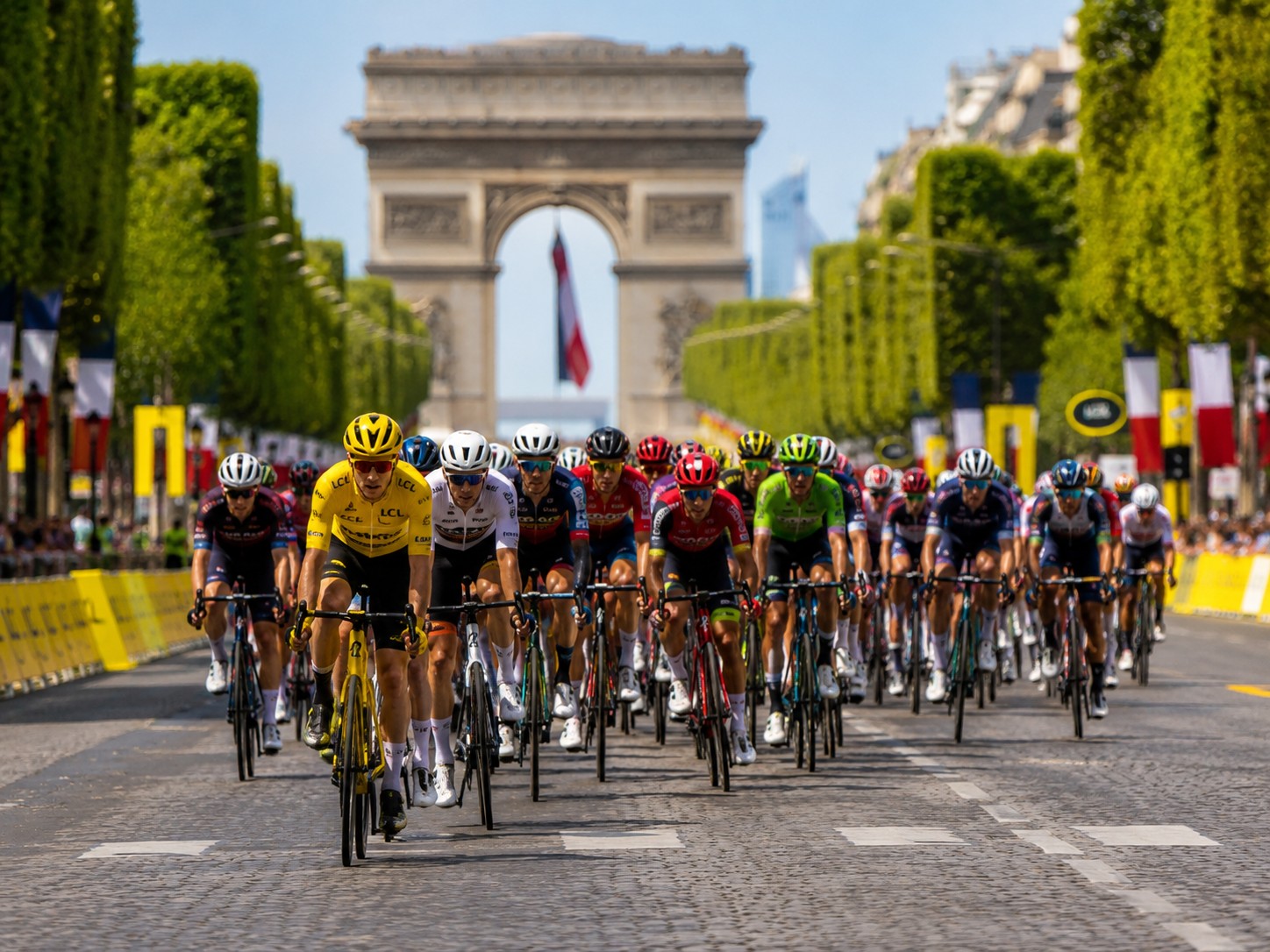
Alongside the Yellow Jersey, the secondary classifications are among the most exciting storylines of the Tour de France. In 2026, the Green Jersey is particularly interesting because the points classification once again favors traditional sprinters. At the same time, the mountain-heavy route means the Polka Dot Jersey remains within reach for general classification contenders.
The White Jersey appears to be the most wide open. With Paul Seixas, Isaac del Toro, Juan Ayuso, Florian Lipowitz and several other young GC riders on the start list, multiple contenders are capable of fighting not only for the best young rider classification but also for a top overall finish.
Which Jersey Classification Is the Most Open in 2026?
The White Jersey looks the hardest to predict. The Green Jersey clearly favors sprinters such as Tim Merlier, Jasper Philipsen, Mads Pedersen, Biniam Girmay and Olav Kooij. The Polka Dot Jersey, on the other hand, could go either to an aggressive climber or to a general classification rider who collects major points on the toughest Alpine stages.
Jersey Favorites at a Glance
| Jersey | Classification | Top Contenders | Why? |
|---|---|---|---|
| Green | Points Classification | Tim Merlier, Jasper Philipsen, Mads Pedersen, Biniam Girmay, Olav Kooij | Flat stages and intermediate sprints favor fast and consistent sprinters. |
| Polka Dot | Mountains Classification | Tadej Pogačar, Jonas Vingegaard, Richard Carapaz, Lenny Martinez, Sergio Higuita | The biggest points are awarded on the toughest mountain stages, especially in the final week. |
| White | Best Young Rider Classification | Isaac del Toro, Paul Seixas, Juan Ayuso, Florian Lipowitz, Cian Uijtdebroeks | Several young riders have realistic top-10 or even podium ambitions. |
Green Jersey: An Advantage for Pure Sprinters
The points classification is expected to be shaped once again by traditional bunch sprints in 2026. Tim Merlier and Jasper Philipsen possess the highest top speed, while Mads Pedersen and Biniam Girmay are also capable of scoring heavily on more demanding stages.
Olav Kooij is a dangerous outsider because his team is built around his sprinting ambitions. Ultimately, success will depend not only on stage victories but also on consistently collecting points in intermediate sprints and securing top-five finishes.
Polka Dot Jersey: Breakaway Specialist or GC Rider?
The mountains classification is much harder to predict. If Pogačar or Vingegaard dominate the summit finishes, they could automatically collect enough mountain points to challenge for the jersey. At the same time, riders such as Richard Carapaz, Lenny Martinez or Sergio Higuita could build an advantage by joining early breakaways.
The Alpine stages featuring Orcières-Merlette and Alpe d’Huez could completely reshape the competition late in the race. Riders reaching the decisive climbs with an advantage have the opportunity to collect a huge number of points in a single day.
White Jersey: More Than a Young Rider Competition
The White Jersey could become one of the highest-quality competitions of the entire Tour. Isaac del Toro, Paul Seixas, Juan Ayuso, Florian Lipowitz and Cian Uijtdebroeks are not simply promising youngsters—they are genuine general classification contenders.
The advantage belongs to riders who can remain consistent over three demanding weeks rather than excel on only one or two mountain stages. That is why the White Jersey is closely linked to the battle for a place in the overall top ten.
Analysis
The secondary classifications in 2026 will depend heavily on how the race unfolds. In the Green Jersey competition, consistency is more valuable than a single stage victory. Missing several sprint opportunities or failing to score at intermediate sprints can quickly end a rider’s chances.
The Polka Dot Jersey will largely depend on whether the overall favorites fight for the summit finishes themselves or allow breakaway groups to take the major mountain points. Meanwhile, the White Jersey is likely to be the classification most closely connected to the general classification because several young riders have genuine GC ambitions.
Sources
This assessment is based on the current start list published by ProCyclingStats, confirmed team selections, and recent analyses of the points, mountains and young rider classifications from Cycling Weekly and Domestique.
TV Coverage and Live Streaming for the 2026 Tour de France
The 2026 Tour de France will be broadcast internationally, with official coverage available in more than 190 countries. The exact broadcaster depends on the viewer’s country, so fans should always check the official Tour de France broadcaster overview and the local rights holder before the race.
For international viewers, the most important point is that live coverage, stage highlights and streaming access vary by market. Eurosport is a key European rights partner, while countries such as the United States, the United Kingdom, Canada and Australia usually have their own dedicated broadcasters and streaming platforms.
Where Can You Watch the 2026 Tour de France?
The safest option is to check the official Tour de France broadcaster page shortly before the race. It lists the official TV and streaming partners by country and provides the most reliable starting point for live coverage, highlights and special programming.
Coverage Overview
| Region | TV | Live Stream | Assessment |
|---|---|---|---|
| Europe | Eurosport / local broadcasters | Official Eurosport and local streaming platforms | Often the most comprehensive option for long live windows and race analysis. |
| United Kingdom | TNT Sports / local rights holder | Official UK streaming platforms | A key market for English-language coverage and extended race analysis. |
| United States | Local rights holder | Official US streaming platform | Best checked via the official broadcaster list before the Grand Départ. |
| Canada / Australia | Local broadcasters | Country-specific streaming services | Rights and packages can differ significantly by market. |
Official Broadcasters Are the Starting Point
The Tour de France publishes an official broadcaster overview for viewers worldwide. Since TV rights are country-specific, this is the most reliable way to find the correct live TV channel, streaming platform, highlights package and special programming in your region.
Eurosport: A Major Option Across Europe
Eurosport remains one of the most important Tour de France broadcasters in Europe and is traditionally strong when it comes to long live windows. For cycling fans who want to follow breakaway phases, tactical developments and detailed post-race analysis, Eurosport is often the most comprehensive choice.
Why Broadcast Times Matter
Especially on mountain stages, the decisive situations often develop long before the finish. Fans who only tune in for the final kilometers may miss the phase when breakaways form, domestiques are dropped and the favorites’ teams start increasing the pace.
Viewing Tip
Casual fans can usually rely on their national rights holder’s main broadcast. Anyone who wants to understand the race tactically should look for longer live windows and expert analysis, especially on mountain and time trial stages.
Start times can vary from stage to stage. On high-mountain days, it is worth opening the live stream early because key tactical moves often happen well before the final climb.
Note
Broadcast times, streaming availability and subscription packages can change at short notice. The latest information is always provided by the local rights holders and the official Tour de France broadcaster overview.
Prediction: Who Will Win the 2026 Tour de France?
As the Grand Départ in Barcelona approaches, all signs point to another highly anticipated showdown between Tadej Pogačar and Jonas Vingegaard. Both riders have tailored their entire season around the Tour de France and arrive in outstanding form. Several other contenders are capable of fighting for the podium, but based on the current outlook, the Yellow Jersey is once again most likely to be decided between these two exceptional champions.
The 2026 Tour route demands virtually every skill a Grand Tour rider can possess: a strong team for the opening team time trial, elite climbing ability, a solid individual time trial and enough endurance to survive one of the toughest final weeks in recent years. That combination once again makes Pogačar and Vingegaard the most complete contenders for overall victory.
Our Prediction in One Sentence
If crashes and extraordinary race situations do not intervene, Tadej Pogačar starts the 2026 Tour de France as the favorite to claim his fifth Tour title. Jonas Vingegaard, however, remains the rider most capable of challenging him—especially during the decisive Alpine stages in the final week.
Our Assessment of the Main Favorites
| Rider | Winning Chance | Our Assessment |
|---|---|---|
| Tadej Pogačar | ★★★★★ | The most complete rider in the peloton and the deserved top favorite. |
| Jonas Vingegaard | ★★★★☆ | The strongest challenger, particularly in the Alps. |
| Remco Evenepoel | ★★★☆☆ | A podium finish is realistic; overall victory would require a perfect race. |
| Florian Lipowitz | ★★☆☆☆ | A top-10 finish looks very achievable, with an outside chance of the podium. |
| Paul Seixas / Isaac del Toro | ★★☆☆☆ | Outstanding talent, but still lacking experience over three demanding Tour weeks. |
Why Pogačar Holds the Strongest Hand
The Slovenian currently combines every quality needed to conquer this route. He is among the world’s best climbers, an elite time trialist and is backed by one of the strongest squads in the peloton at UAE Team Emirates-XRG. His versatility makes him a threat to gain time on almost every type of stage.
Where Vingegaard Can Turn the Race Around
If the Tour is decided in the final week, Vingegaard’s chances increase significantly. His greatest strength is maintaining an exceptionally high level over three weeks of racing. That makes the Alpine stages—and especially the closing mountain block—his biggest opportunity to put Pogačar under pressure.
Potential Surprise Contenders
Despite the spotlight on Pogačar and Vingegaard, Remco Evenepoel remains a genuine podium contender. Behind him, Florian Lipowitz, Isaac del Toro and Paul Seixas could all benefit from an aggressive race or unexpected developments. If either of the two leading favorites loses significant time or suffers a crash, the battle for the general classification could change dramatically.
Final Verdict
The 2026 Tour de France has all the ingredients to become one of the most exciting editions in recent years. The route is demanding, the favorites arrive in excellent form and a new generation of young riders is pushing toward the top of world cycling.
Based on the current outlook, Tadej Pogačar remains the most likely overall winner. If Jonas Vingegaard can once again exploit his remarkable endurance over three weeks, the battle for the Yellow Jersey may not be settled until the final major Alpine stages.
FAQ About the 2026 Tour de France
Here are answers to the most common questions about the 2026 Tour de France — from dates and route details to TV coverage.
When does the 2026 Tour de France take place?
The 2026 Tour de France takes place from July 4 to July 26, 2026. The race features 21 stages and two rest days.
Where does the 2026 Tour de France start and finish?
The Grand Départ takes place in Barcelona. After 21 stages, the race traditionally finishes on the Champs-Élysées in Paris.
How many stages does the 2026 Tour de France have?
The race includes 21 stages over a total distance of 3,321.2 km (2,064.8 miles). The route features flat, hilly and mountain stages, as well as one team time trial and one individual time trial.
Who are the favorites to win the Tour de France?
Based on the current outlook, Tadej Pogačar and Jonas Vingegaard are the two biggest favorites for the Yellow Jersey. Remco Evenepoel and Florian Lipowitz are also among the leading general classification contenders.
Where can you watch the 2026 Tour de France live?
The 2026 Tour de France will be shown by official broadcasters around the world. Coverage, streaming platforms and start times vary by country, so viewers should check the official Tour de France broadcaster overview and their local rights holder before each stage.
Which stages could decide the overall victory?
The toughest Alpine stages in the third week are likely to be decisive. The individual time trial, the early mountain finishes in the Pyrenees and the stages to Alpe d’Huez could also create major gaps in the general classification.
Which riders could surprise at the 2026 Tour de France?
Florian Lipowitz is one of the most exciting emerging general classification riders, while Isaac del Toro and Paul Seixas represent cycling’s next generation of Grand Tour talent. Georg Steinhauser and Biniam Girmay are among the riders most likely to animate the race with aggressive breakaways and stage-winning ambitions.
Update Box
Latest Update
This article will be updated regularly until the start of the 2026 Tour de France. Changes to the start list, injuries, team selections, TV coverage or the route will be added as soon as possible.
- ✔ Updates to confirmed starters
- ✔ Injuries and late withdrawals
- ✔ Changes to TV coverage and live streaming
- ✔ Adjustments to stages or route details
- ✔ New favorites after the final preparation races