
Editor’s Note
The PDC World Darts Championship 2026 – officially staged as the
2025/26 Paddy Power World Darts Championship – starts on
11 December 2025 at London’s legendary Alexandra Palace.
With a record-breaking 128-player field, a total prize fund of
£5 million and a historic £1 million winner’s cheque, this edition is set to be one of the most influential World Championships in PDC history.
In this in-depth English preview, we break down format changes, qualification routes, favourites, dark horses and the impact of the darts boom across Europe and beyond.
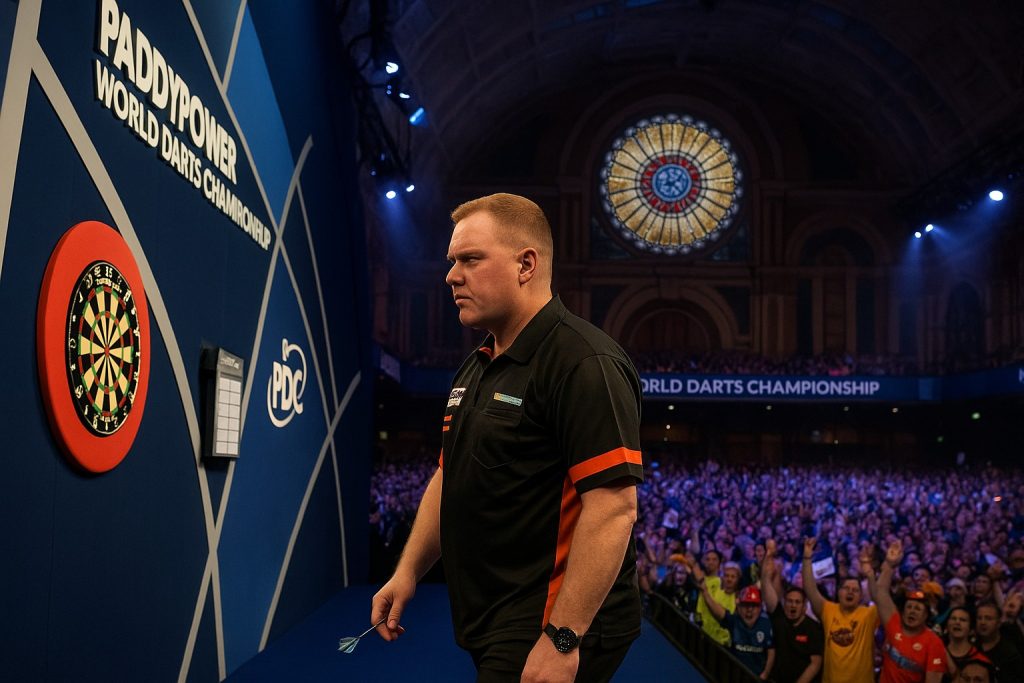
Table of Contents
Click on a section to jump directly to the part of the article you’re interested in.
- Overview & New Framework for the 2026 World Darts Championship
- The 128-Player Field & National Perspectives
- Favorites & Outsiders
- Schedule & Potential Blockbuster Matches
- History & Records of the PDC World Championship
- The Darts Boom & the Significance of 2026
- Predictions & Expert Insights for 2026
- Statistics, Charts & Performance Tracker
- FAQ: 2026 PDC World Darts Championship
Tournament Overview: What Fans Need to Know About the 2026 World Darts Championship
The PDC World Darts Championship 2026, marketed for sponsorship reasons as the 2025/26 Paddy Power World Darts Championship, takes place from 11 December 2025 to 3 January 2026 at London’s iconic Alexandra Palace. The event features a record-breaking 128-player field, a total prize fund of £5,000,000 and a historic £1,000,000 winner’s prize – turning the world title into one of the most valuable crowns in professional darts.
While the Ally Pally atmosphere, the fancy dress crowds and the famous walk-ons remain the same, the 2026 edition represents a clear turning point for the PDC World Championship. An expanded field, an adjusted qualification structure and increased pressure on seeded players combine to create what many observers describe as a “new era” for the sport’s flagship event.
1.1 Key Facts: Dates, Venue & Format
| Dates | 11 December 2025 – 3 January 2026 |
| Venue | Alexandra Palace, London (England) |
| Organiser | Professional Darts Corporation (PDC) |
| Field Size | 128 players (record field) |
| Total Prize Fund | £5,000,000 |
| Winner’s Prize | £1,000,000 |
The World Championship continues to be played in the traditional set format, with the number of sets required to win increasing round by round. The showpiece final is contested as a best-of-13-sets encounter, with the winner lifting the famous Sid Waddell Trophy. With 128 players involved, the tournament is longer, denser and more brutal than ever.
1.2 What’s New in 2026?
The 2026 World Championship is not simply another chapter of the same story. Several structural changes ensure that this tournament will be a real stress test for the world’s elite:
- 128 players instead of 96: For the first time, a full 128-player field descends on Ally Pally, significantly increasing the number of matches and global representation.
- All players start in Round 1: Unlike previous years, even the top seeds do not receive a bye into Round 2. The biggest stars are exposed from day one, facing either dangerous qualifiers or in-form Pro Tour specialists.
- At least four women guaranteed in the field: The PDC has committed to a minimum of four female participants, further boosting the visibility and competitiveness of women’s darts on the biggest stage.
- New qualification balance: 40 spots via the PDC Order of Merit, 40 via the Pro Tour Order of Merit, plus 48 spots through International Qualifiers (regional circuits, Women’s Series, Development & Challenge Tours and continental events).
- Increased ranking impact: With such a dramatic prize money hike, a deep run at the 2026 Worlds will launch players up the rankings and transform careers financially. This escalates the pressure on every single set.
1.3 Why 2026 Is Viewed as a Record-Breaking Edition
Combining record prize money, an expanded field and the removal of Round-2 byes, many analysts describe the 2026 World Championship as a true record tournament. From a fan’s point of view, three aspects stand out:
- More matches, more drama: With 128 players involved and seeds playing from Round 1, the probability of early upsets and high-profile clashes in the opening week rises sharply.
- A more global field than ever: The 48 international spots ensure participation from a growing range of nations, underlining the World Championship’s claim to be a genuinely global event.
- Record prize money as a statement: Doubling the total prize fund sends a clear message about the sport’s trajectory. It reflects the huge demand from broadcasters, sponsors and streaming platforms – particularly in core markets like the UK, Germany and the Netherlands.
For fans around the world, that means: a longer World Championship, more top-level darts from day one and countless storylines – from hyped teenagers and returning legends to international qualifiers chasing the biggest upset of their careers.
Field Analysis: Who Is Already in – and How Did They Qualify?
As of mid-November 2025, the majority of the 128 spots for the PDC World Darts Championship 2026 are already allocated. The final places – including intense Tour Card Holder Qualifiers and a handful of late international qualifiers – are decided in the weeks leading up to Ally Pally.
2.1 Qualified Players & Seeding Structure
The 128-player field is built around three main pillars:
- 40 players via the PDC Order of Merit (two-year ranking), with the top 32 forming the seeded group.
- 40 players via the PDC Pro Tour Order of Merit, provided they are not already qualified via the main Order of Merit.
- 48 players via International Qualifiers – including Development Tour, Challenge Tour, Women’s Series, regional tours and continental championships in Europe, Asia, Oceania, North America, Latin America and Africa.
For up-to-date lists, specialist sites like English-language darts portals and ranking trackers provide detailed breakdowns of the field, including portraits of lesser-known qualifiers and live updates on last-minute changes.
Indicative Top 16 of the PDC Order of Merit (Projected Top Seeds)
| Rank | Player | Country | Order of Merit Earnings |
|---|---|---|---|
| 1 | Luke Humphries | England | £1,769,000 |
| 2 | Luke Littler | England | £1,697,000 |
| 3 | Michael van Gerwen | Netherlands | £741,250 |
| 4 | Stephen Bunting | England | £652,250 |
| 5 | James Wade | England | £579,750 |
| 6 | Jonny Clayton | Wales | £566,500 |
| 7 | Gian van Veen | Netherlands | £517,000 |
| 8 | Chris Dobey | England | £513,250 |
| 9 | Rob Cross | England | £502,500 |
| 10 | Josh Rock | Northern Ireland | £497,000 |
| 11 | Danny Noppert | Netherlands | £496,500 |
| 12 | Damon Heta | Australia | £473,000 |
| 13 | Gary Anderson | Scotland | £464,500 |
| 14 | Gerwyn Price | Wales | £459,750 |
| 15 | Ross Smith | England | £457,750 |
| 16 | Martin Schindler | Germany | £429,000 |
Note: The exact ranking order can still shift slightly in the weeks prior to Ally Pally, but these names are effectively guaranteed to be among the leading seeds and major talking points of the 2026 Worlds.
- 40 players via the PDC Order of Merit (two-year rolling ranking).
- 40 players via the Pro Tour Order of Merit (season-long floor performance).
- 48 players via international qualifiers – including regional tours, Women’s Series, Development & Challenge Tours, continental championships and national qualifiers.
2.2 German Players in Focus (for International Readers)
From an international perspective, Germany has quietly evolved from an “emerging market” into a genuine darts powerhouse. Several German professionals have secured their place at the 2026 World Championship and will attract particular attention from broadcasters and fans:
| Player | Qualification Route | Status & Profile |
|---|---|---|
| Martin Schindler | Top 40 PDC Order of Merit | Seeded as a Top-16 player; statistically Germany’s most consistent World Championship performer and a realistic contender for a deep run. |
| Ricardo Pietreczko | Top 40 PDC Order of Merit | Already a European Tour champion with massive scoring power; firmly established inside the world’s Top 40. |
| Niko Springer | High Pro Tour ranking | One of the most exciting German newcomers, converting a strong Pro Tour season into his World Championship debut. |
| Gabriel Clemens | Pro Tour Order of Merit | Known globally as the “German Giant”, reached the semi-finals in 2023 and remains a big-stage threat with huge fan support. |
| Lukas Wenig | Pro Tour Order of Merit | Worked his way up through the floor circuit; known for explosive scoring and upset potential in early rounds. |
| Max Hopp | Pro Tour Order of Merit | The former “Maximiser” returns to Ally Pally, bringing valuable experience and still substantial popularity in Germany. |
| Dominik Gruellich | Pro Tour Order of Merit | Reached the Worlds via consistent floor results; one of the most interesting German debutants from a pure performance perspective. |
| Arno Merk | Super League DACH winner | Qualified through the expanded DACH Super League and now steps into the global spotlight as a dangerous, battle-tested “floor grinder”. |
For non-German readers: several of these names have already produced big TV performances in front of loud German crowds on the European Tour. Translating that form to the World Championship – with its unique pressure and schedule – is the next big step.
2.3 International Newcomers & High-Profile Returnees
Thanks to the enlarged 128-player structure, the 2026 Worlds will be one of the most international editions in history. Several names stand out either as exciting debutants or as well-known faces returning via alternative routes:
- Beau Greaves (ENG): A multi-talented player who has dominated at youth and women’s level and now chooses the PDC Worlds as her primary stage. She is widely seen as a potential game-changer for women’s darts.
- Lisa Ashton, Fallon Sherrock, Noa-Lynn van Leuven, Gemma Hayter: A strong women’s contingent that not only fulfils the minimum requirement of four female participants, but also raises the sporting ceiling of the tournament.
- Teemu Harju (FIN), Andreas Harrysson & Oskar Lukasiak (SWE): Representatives of the Nordic & Baltic region, qualified via regional tours and championships, underlining Northern Europe’s growing depth.
- Adam Sevada, Alex Spellman, Leonard Gates, Stowe Buntz, David Cameron: Part of a strong North American armada, fuelled by the CDC Pro Tour, continental events and cross-border tournaments.
- Jesus Salate (ARG) & David Munyua (KEN): Salate represents Latin America, while Munyua becomes the first Kenyan in the World Championship field – both symbolise the widening global footprint of the PDC system.
- Veteran returnees like Mervyn King and Cristo Reyes: Experienced players who have fought their way back via Challenge Tour or regional qualifiers, combining raw hunger with decades of big-stage knowledge.
- Europe: Dominant core – including all top Order of Merit seeds and most Pro Tour qualifiers.
- Asia: Multiple spots via Asian Tour, Asian Championship and national qualifiers (e.g. Japan, China, India, Philippines).
- North America: Places via CDC Pro Tour and associated championships in the USA & Canada.
- Oceania: Qualifiers via tours and circuits in Australia & New Zealand.
- Latin America & Africa: Fewer spots, but often among the most compelling storylines when underdogs hit the big stage.
2.4 Remaining Spots & the “Road to Ally Pally”
Even when most of the field is known, the qualification race is far from boring. In fact, the final weeks often deliver some of the most dramatic storylines of the entire darts season:
- PDC Tour Card Holder Qualifier: A high-class, high-pressure event shortly before the World Championship, where several last spots are awarded in a single day. It is here that many “last-minute entrants” punch their ticket to Ally Pally.
- Race to the World Championship: Live ranking trackers reveal in real time which players sit inside or outside the crucial cut-off lines, particularly in the Pro Tour race. A single match can decide whether a player boards a flight to London or not.
- Late international qualifiers: Some regional and national events – particularly in Europe, Asia and Oceania – are staged close to the Worlds and can still add new names to the 128-player cast.
For players on the bubble, every leg in the final Pro Tour events and qualifiers carries enormous weight. For fans, tracking these races is a great way to get familiar with lesser-known names who might cause a stir in the early rounds at Ally Pally.
Favorites & Outsiders: Who Can Win the 2026 PDC World Darts Championship?
The following assessment is based on the current PDC Order of Merit, recent TV form and World Championship outright odds from leading bookmakers. Odds and rankings can still change before the first dart is thrown at Ally Pally.
3.1 The Top Favorites at a Glance
Ahead of the 2026 World Championship, a relatively clear group of leading contenders has emerged. The title race narrative is dominated by two names: Luke Littler, the teenage phenomenon and defending world champion, and Luke Humphries, the 2024 world champion and one of the most complete players in the modern era.
Behind them, a strong chasing pack featuring Michael van Gerwen, Gian van Veen, Gerwyn Price, Josh Rock and other elite names is ready to punish any dip in form or focus.
Selected Top Favorites & Indicative World Championship Odds
| Player | Country | World Ranking (approx.) | Indicative Odds to Win* |
|---|---|---|---|
| Luke Littler | England | 1 | ~ 11/8 – 6/4 |
| Luke Humphries | England | 2 | ~ 7/2 |
| Gian van Veen | Netherlands | Top 10 | ~ 8/1 |
| Michael van Gerwen | Netherlands | Top 5 | ~ 11/1 |
| Gerwyn Price | Wales | Top 10 | ~ 12/1 |
| Josh Rock | Northern Ireland | Top 15 | ~ 14/1 |
*Odds are indicative only and vary between bookmakers. They serve as a snapshot of current market sentiment, not as betting recommendations. Please gamble responsibly if you choose to bet.
The “Big Two”: Littler & Humphries
-
Luke Littler (defending champion, World No.1):
Since his sensational debut World Championship triumph, Littler has powered through the circuit, winning major titles and posting astronomical averages. His combination of fearless scoring and surprisingly mature composure on the doubles makes him the man to beat. -
Luke Humphries (former world champion & serial finalist):
Humphries remains one of the most complete players on tour – high scoring, intelligent combination finishing and a proven record in long-format TV darts. Having lost his World No.1 position to Littler, he has every motivation to reclaim the biggest prize of all.
Many pre-tournament previews will frame 2026 as another chapter in a budding rivalry between the two Lukes. But with a deep field and a brutal format, there is no guarantee that either will enjoy a smooth path to the final.
3.2 Dark Horses: Players with Realistic Semi-Final or Final Upside
Behind the headline favorites, a group of dangerous contenders is lurking – players capable of stringing together four or five high-level sessions and blowing up the draw:
- Gian van Veen: One of the fastest-rising stars on tour. His peak scoring can rival anyone in the world, including Littler, and he has already shown he can produce world-class performances on big TV stages.
- Josh Rock: Known for his ferocious heavy scoring, Rock can blow opponents away in short bursts. If he tightens his doubling for a fortnight, he has the game to reach – and win – a semi-final.
- Stephen Bunting: Revitalised in recent years, “The Bullet” has a major title on his CV from the 2024/25 period and looks calmer and more clinical than ever. His timing on big finishes and his experience in long matches make him a textbook dark horse.
- Martin Schindler: For international readers, keep a close eye on the German No.1. Schindler’s rise into the world’s Top 16 is backed by elite-level numbers and increasingly confident TV displays. A favourable draw could open the door to a quarter-final – or more.
- Gerwyn Price & Gary Anderson: Both are technically part of the “old guard”, but writing them off would be naïve. Their winning experience in world and major finals means that, if they find form at the right moment, they can still outlast younger rivals under maximum pressure.
- Ranked roughly between 8 and 24 in the Order of Merit.
- At least one deep run at a major or European Tour event in the last 12–18 months.
- High 180 output but occasional volatility on doubles.
- Less media pressure than headline favourites.
- A draw that avoids the very top names until the quarter-finals.
3.3 Outsiders with Giant-Killing Potential
The expanded 128-player field ensures that the early rounds are full of dangerous names with big odds attached. These players are unlikely title winners – but they can absolutely blow up the draw by eliminating seeds:
- Niko Springer: A fearless, fast-throwing German talent with enormous scoring peaks. As an unseeded player, he is exactly the kind of first- or second-round opponent no Top-16 seed wants to face.
- Beau Greaves: Already a star in the women’s game, Greaves has proven she can handle top male opponents as well. Her presence at the Worlds is more than a marketing story – it poses a real sporting threat to experienced pros.
- Asian & North American qualifiers: Players emerging from the Asian Tour or CDC circuits often arrive underrated and under-scouted. In best-of-5 or best-of-7 set matches, one blistering performance is enough to send a seed home.
- Returning veterans: Names like Mervyn King or Cristo Reyes, coming back via Challenge Tour or regional qualifiers, combine underdog motivation with decades of stage experience – a highly dangerous mix in Round 1.
From a neutral perspective, these outsiders are essential to the drama of the Worlds. They are the players who turn quiet afternoon sessions into social media moments and headline stories.
3.4 How the Bookmakers See the 2026 Worlds
Looking across the major outright markets, one pattern is clear: Luke Littler is rated as a clear favourite, with Luke Humphries as his closest challenger. Behind them, odds drift into the high single digits and low double digits for Van Veen, Van Gerwen, Price, Rock and others.
Once again: these prices reflect market opinion rather than guaranteed outcomes. The combination of an expanded field and no byes for seeds means that this World Championship is arguably more volatile than any that came before it.
Schedule & Potential Blockbuster Matches
4.1 Round Structure & Session Overview
The 2026 World Championship follows the familiar festive rhythm, but the expanded field means even more high-stakes darts within a similar time window:
| Dates | Round | Notes |
|---|---|---|
| 11–17 December 2025 | Round 1 | All 128 players enter from the very first round (new format). |
| 18–23 December 2025 | Round 2 | High-intensity phase with many seeds facing in-form qualifiers and Pro Tour specialists. |
| 27–29 December 2025 | Round 3 | First clear picture of who is mounting a genuinely deep run. |
| 30–31 December 2025 | Last 16 | Often some of the most tactically interesting matches of the event. |
| 1–2 January 2026 | Quarter-finals | Only the very elite remain – every match is a potential classic. |
| 3 January 2026 | Semi-finals | Two high-quality battles, often defined by small momentum swings. |
| 3 January 2026 | Final | Best-of-13 sets, the longest and most prestigious match of the season. |
The PDC will publish the full day-by-day session schedule – including exact start times and match orders – on its official channels closer to the event.
4.2 Potential Headline Matches Based on Seeding
With all seeds entering from Round 1, there is scope for blockbuster ties earlier than usual. While the exact draw is not yet known, certain high-profile clashes would simply explode the bracket:
- Littler vs. Humphries – showdown in the final: The dream scenario for many neutrals: a rematch between the sport’s new superstar and the man he dethroned as world No.1.
- Van Gerwen vs. Littler / Humphries in a quarter-final: With the draw more volatile, a clash of generations could easily be pulled forward, turning a “potential final” into an early New Year’s blockbuster.
- Van Veen or Rock vs. a big name in Round 3: The new wave versus the old guard – matches that could symbolise a power shift inside the Top 16.
- Price or Anderson against one of the Lukes: An established world champion against the new era would be rich in narrative and guaranteed atmosphere.
Even before the draw is made, one thing is certain: with no free passes into Round 2, headline names are at risk far earlier than usual.
4.3 Possible Highlight Matches Involving German Players
From an international broadcast perspective, matches involving German players are now prime-time material. Possible high-interest pairings include:
- Martin Schindler vs. a Top-4 seed: A last-16 or quarter-final featuring Schindler against Littler, Humphries or Van Gerwen would attract huge German audiences and provide a clear benchmark for where German darts stands in 2026.
- Gabriel Clemens vs. a returning legend: Clemens facing a former world champion or Premier League star could revive memories of his own historic semi-final run.
- Springer or Pietreczko vs. a top seed in Round 2: From a pure sport perspective, these would be must-watch matches: young, explosive Germans with nothing to lose against heavily favoured household names.
For tournament organisers and broadcasters alike, German involvement deep into the bracket is a commercial dream – and the 2026 Worlds give several players from Germany a realistic shot at exactly that scenario.
History & Records: What Makes the PDC World Championship Unique?
To understand why the 2026 PDC World Darts Championship is considered such a watershed moment, it helps to look back at how the tournament has evolved. From the early days at the Circus Tavern to the modern era at Alexandra Palace, the Worlds have produced iconic champions, record-breaking statistics and unforgettable storylines.
5.1 Iconic Moments at Ally Pally & Beyond
The PDC World Championship has always been more than just a ranking event. It is the stage on which careers are defined and legacies are sealed. A few historic snapshots that shaped the mythology of the tournament:
- Phil Taylor’s era of dominance: Multiple world titles and a level of sustained excellence that set the benchmark for every generation that followed.
- Switch to Alexandra Palace: The move from the Circus Tavern to Ally Pally transformed the Worlds into a global TV spectacle – bigger venue, bigger crowds, bigger production.
- Emergence of new world champions: The likes of Michael van Gerwen, Gary Anderson, Rob Cross, Peter Wright and Gerwyn Price showed that the World Championship can propel new stars into superstardom almost overnight.
- Recent fairytale runs: Sensational underdog stories and breakthrough semi-finals by previously lesser-known players underline how volatile and open the modern Worlds can be.
- The arrival of teenage superstars: With Luke Littler’s explosive breakthrough, the Worlds have entered an era in which players in their teens and early twenties can realistically challenge for the title.
For many players, lifting the Sid Waddell Trophy is not just about prize money. It is about securing a place in darts history, guaranteeing invitations to the biggest events and cementing their name alongside the game’s all-time greats.
5.2 Records, Statistics & Playing Trends
Over the years, the PDC World Championship has produced a long list of records – from most titles and highest averages to the sheer volume of 180s hit during a single tournament.
| Category | Type of Record | Comment |
|---|---|---|
| World Titles | Multiple-time world champions | Domination across different eras and equipment generations. |
| 180s in a Tournament | Total tournament maximums | Growth in scoring power as professionalism, practice routines and equipment improve. |
| Tournament Average | Overall tournament average for a champion | Slowly increasing baseline, reflecting higher consistency at elite level. |
| High Checkouts | Most 100+ or 120+ checkouts recorded | Combination finishing becomes an increasingly important differentiator. |
| Age Records | Youngest / oldest champions | Underlines both the rise of youth and the longevity of experienced pros. |
Not a scientific graph – but a visual way to illustrate how much the standard at the World Championship has risen over time.
5.3 What History Suggests for 2026
Historical patterns do not decide future tournaments – but they offer useful hints:
- World champions rarely repeat easily: Defending the title is extremely difficult, even for all-time greats. This is relevant when assessing Luke Littler’s chances of going back-to-back.
- New formats often produce upsets: When tournament structures change, seeds tend to be more vulnerable. The 128-player, all-start-in-Round-1 format may create more volatility than usual.
- Proven big-stage experience matters: Players who have already handled semi-finals and finals often perform better in the deepest rounds, even if their season-long numbers are slightly inferior.
- Darts is getting younger – but not exclusively: While teenagers and players in their early 20s are increasingly competitive, experienced stars still frequently reach the last four.
Taken together, history suggests that the 2026 Worlds are likely to offer a mix of continuity and disruption: established names in the business end of the event – but with a genuine chance that a younger or less decorated player breaks through to the title.
The Global Darts Boom & Why the 2026 World Championship Matters So Much
The PDC World Championship is both a sporting highlight and a barometer of darts’ commercial health. Rising TV ratings, sold-out sessions at Ally Pally, and expanding international tours all point to the same trend: darts is booming. The 2026 edition, with its record prize fund and enlarged field, is perhaps the clearest signal yet.
6.1 TV Ratings & Streaming Reach
In several core markets, the Worlds are now among the most-watched winter sports broadcasts. Live coverage, highlights, social clips and behind-the-scenes content significantly extend the tournament’s reach:
- UK: The World Championship is a staple of the festive TV schedule, with peak-viewing matches regularly attracting millions of viewers.
- Germany: Darts has evolved from a niche product to a mainstream winter TV property, with strong viewing figures for German players and finals.
- Netherlands: Historically one of the sport’s strongest markets, boosted by the success of Dutch stars and a passionate fanbase.
- Streaming platforms: Younger fans increasingly follow the Worlds via streaming, second-screen apps and social media, rather than traditional linear TV only.
The exact numbers vary by broadcaster and season, but the direction of travel is clear: upward.
6.2 Attendance, Atmosphere & Ticket Demand
Alexandra Palace has become synonymous with Christmas and New Year’s sport. The combination of fancy dress, walk-on music and high-level darts creates a unique live atmosphere:
- Multiple sessions sold out: Many evening sessions and key knockout rounds sell out quickly once tickets go on general sale.
- International travel: Fans from Germany, the Netherlands, Scandinavia and beyond plan weekend trips around specific sessions and players.
- Atmosphere as a “product”: The crowd itself has become a central part of the broadcast – songs, chants and celebrations are heavily featured in highlight clips.
- ● Opening night & finals sessions – extremely high demand.
- ● Popular evening sessions in rounds 2–3 – high demand, some availability.
- ● Weekend sessions – often among the first to sell out.
6.3 The Darts Hype in Germany
For international readers, Germany is one of the fastest-growing darts markets. The combination of domestic TV coverage, successful German players and a growing amateur scene has turned darts into a mainstream topic:
- TV & streaming coverage: Major events, and especially the World Championship, are regularly broadcast with German commentary and studio analysis.
- European Tour events in Germany: Multiple tournaments each season provide local fans with regular high-profile live darts.
- Rise of German professionals: Players like Martin Schindler, Gabriel Clemens and Ricardo Pietreczko have become established faces on the main tour.
- Grassroots & pub darts: Local leagues and pub competitions have grown significantly, fuelled by media exposure.
6.4 Economic Impact, Sponsorship & Media Rights
The decision to raise the World Championship prize fund to £5 million is not a gamble – it is a reflection of strong underlying economics:
- Sponsorship income: Title sponsors and secondary partners view the Worlds as a premium advertising platform in the winter sports calendar.
- Media rights: Domestic rights in the UK and Germany, plus international deals, form a major revenue pillar for the PDC and broadcasters.
- On-site spend: Ticket sales, merchandise, hospitality packages and food & beverage contribute significantly to event turnover.
- Long-term brand building: The Worlds function as a marketing engine for the entire PDC ecosystem – tours, World Series events and partner circuits.
Media & broadcast rights – largest block
Sponsorship & commercial partnerships
Ticketing & hospitality
Merchandise & on-site sales
In this context, the 2026 World Championship is not just a sporting event – it is a flagship entertainment product for a global audience, with the PDC and its partners using it as a showcase for what modern darts can be.
Predictions & Expert Insights for the 2026 World Championship
Predicting a darts world champion is always risky – especially in a year with a record field and structural changes. Still, combining statistical indicators with qualitative analysis offers a useful framework for assessing the 2026 title race.
7.1 Impact of the 128-Player Field
The expansion from 96 to 128 players and the removal of Round-2 byes for seeds have several concrete implications:
- Increased workload for top seeds: They must now win one additional match, which adds both physical and mental strain – especially with a tightly packed schedule.
- Higher upset probability: Facing in-form qualifiers and Pro Tour specialists earlier increases the risk of early exits for big names.
- More opportunities for unknown names: International qualifiers gain additional visibility and chances to build momentum over multiple rounds.
- Longer story arcs: Cinderella runs can now stretch over more matches, providing broadcasters with extended narratives to follow.
- Players with strong physical conditioning and focus across long events.
- Heavy scorers who can dominate shorter early-round matches.
- Qualifiers with momentum from recent wins on the floor or regional circuits.
- Experienced players used to grinding through multiple matches in a day.
7.2 Statistical Models & Simulation Approaches
Advanced analysts increasingly use data-driven models to simulate World Championship outcomes. While exact methodologies differ, several core inputs are common:
- Three-dart averages over the last 12–24 months on TV and floor.
- Checkout percentages, especially in matches with longer formats.
- 180 and 140 counts (scoring power and consistency).
- Pressure performance – e.g. deciding legs, last-leg deciders, clutch checkouts.
- Head-to-head records versus other top-32 names.
| Category | Model Output (Typical) | Interpretation |
|---|---|---|
| Championship Probability | Win percentage per player | Highlights how heavily models lean towards Littler, Humphries & a few others. |
| Semi-final Chances | Approx. likelihood of reaching last 4 | Reveals which dark horses have realistic “deep run” potential. |
| Upset Frequency | Number of seeds expected to exit before last 32 | Quantifies how disruptive the 128-player format could be. |
Simulations rarely agree on exact outcomes, but they consistently underline one key point for 2026: even top favourites like Littler and Humphries are far from “locks” in such a deep field.
7.3 Analyst Opinions & Narrative Drivers
Beyond raw numbers, expert pundits often emphasise narrative factors that can influence the tournament:
- Handling of media pressure: Especially relevant for Luke Littler, who attracts massive attention every time he steps on stage.
- Form peaks during the season: Players who time their best performances for the autumn majors often arrive at Ally Pally with momentum.
- Injury or fatigue concerns: A dense calendar can leave players carrying niggles or mental fatigue into the Worlds.
- Draw dynamics: Some sections of the bracket are inevitably tougher than others, creating “groups of death” inside the draw.
- Can Luke Littler handle the pressure of defending his title?
- Will Luke Humphries reclaim the world crown and top ranking?
- Which young contender will use the 128-player format to break into the absolute elite?
- Can German and Dutch players convert strong seasons into genuine title runs?
7.4 Risks, Upset Scenarios & Uncertainties
No preview is complete without acknowledging how unpredictable the Worlds can be. A few of the main uncertainty factors:
- Short early-round formats: One poor set or cold spell on doubles can suddenly end a top seed’s campaign.
- Illness or health issues: Winter tournaments always carry a small risk of players being impacted by illness.
- Draw luck: A brutal early draw can produce top-level matches in round 2 or 3, while others get smoother paths.
- Unfamiliar qualifiers: Little data on some international qualifiers makes it hard for seeds to prepare properly.
All things considered, the 2026 World Championship looks like a year in which predictions will be particularly fragile – and in which fans might be wise to expect the unexpected.
Statistics, Charts & Performance Tracker Ahead of Ally Pally
Numbers are not everything – but at the modern PDC World Championship, they are a powerful lens for understanding form, playing style and potential. Below is an illustrative statistical overview to help frame the 2026 title race.
8.1 Key Metrics of Leading Contenders
The following table presents indicative values for key performance indicators among top contenders. Exact figures will shift slightly as events are played in the run-up to the Worlds, but the relative strengths are informative:
| Player | TV Average (approx.) | 180s per Leg (tendency) | Checkout % (approx.) |
|---|---|---|---|
| Luke Littler | Very high (upper 90s+) | Exceptional | Solid to strong |
| Luke Humphries | Very high | Strong | Very strong |
| Gian van Veen | High | Explosive | Improving |
| Michael van Gerwen | High | High | High in big moments |
| Gerwyn Price | High | High | Strong under pressure |
| Martin Schindler | Solid high | Good | Consistently strong |
Note: This table is stylised and comparative rather than a precise statistical database. It is designed to highlight profiles – e.g. hyper-scorers versus clinical finishers – rather than publish exact decimal values.
8.2 180s per Match: Long-Term Trend
One of the clearest statistical developments over the last two decades has been the steady increase in 180s hit at the World Championship. Improvements in practice culture, equipment and physical conditioning all contribute to this rise.
The implication for 2026: fans should expect a heavy dose of maximums from day one – especially from the top seeds and aggressive qualifiers.
8.3 Checkout “Heatmap”: Preferred Zones & Patterns
While every professional is capable of finishing across the board, many players have preferred double zones. A simplified “checkout map” helps explain how some of the top names structure their combinations:
| Player Type | Preferred Doubles | Typical Combinations |
|---|---|---|
| Classic D20 Finisher | D20 / D10 | 80+ finishes often steered towards tops or tens. |
| Bull-Oriented Finisher | Bull / D16 / D8 | Frequent use of bull in 90–130 ranges, especially under pressure. |
| Flexible “Modern” Finisher | Multiple doubles | Comfortable across several doubles, making it harder to predict combination routes. |
Once you know a player’s preferred finishing zones, you can “read” potential routes a few darts ahead. This makes watching combinations around 80–170 points even more engaging, especially in deciding legs.
8.4 Form Curves in the Months Before Ally Pally
A simple way to visualise form is to imagine a three-stage curve: spring / summer (floor events and early TV majors), autumn majors and World Championship preparation.
- Type A – Early peakers: Brilliant in spring/summer, but slight dip before the Worlds.
- Type B – Autumn specialists: Peak during the big autumn TV majors and carry momentum to Ally Pally.
- Type C – Slow burners: Quiet season but gradually rising numbers heading into December.
8.5 Head-to-Head Matrix: Key Rivalries
Head-to-head records do not decide matches on their own, but they can influence confidence and expectations – for players and fans alike.
| Rivalry | H2H Tendency | Narrative Angle |
|---|---|---|
| Littler vs. Humphries | Tight, momentum-driven | Potential long-term rivalry defining an era. |
| Van Gerwen vs. new generation | Van Gerwen still dangerous, but gap closing | Classic “established legend vs. rising stars” dynamic. |
| Top seeds vs. German & Dutch dark horses | Occasional upsets | Plenty of evidence that seeded players can be vulnerable early on. |
Combined, these statistical lenses – averages, finishing, 180s, form curves and head-to-heads – underline why the 2026 Worlds are being framed as both high quality and high volatility.
FAQ: 2026 PDC World Darts Championship
To close this preview, here is a compact FAQ section for casual fans, new viewers and international readers planning to follow the 2026 Worlds closely.
Q1: When does the 2026 PDC World Darts Championship take place?
The tournament is scheduled from 11 December 2025 to 3 January 2026, with a short winter break between the pre-Christmas rounds and the post-Christmas phase.
Q2: Where is the World Championship played?
The event is held at the iconic Alexandra Palace in London, often simply referred to as “Ally Pally”. The venue has been the home of the PDC World Championship for many years and is famous for its unique atmosphere.
Q3: How many players are involved in the 2026 edition?
A record 128 players will take part – up from 96 in previous years. All of them start in Round 1, including the biggest stars and top seeds.
Q4: How does the qualification system work?
The field is built from three main routes: 40 spots via the PDC Order of Merit, 40 via the Pro Tour Order of Merit (for players not already qualified), and 48 via international qualifiers – including regional tours, Women’s Series, Development and Challenge Tours and specific continental events.
Q5: What format is used in matches?
Matches are played in the traditional set format. Each set is best-of-five legs, and the number of required sets increases as the tournament progresses. The final is a best-of-13-sets contest.
Q6: What prize money is on offer in 2026?
The total prize fund is a record £5,000,000. The World Champion receives a historic £1,000,000, with significant amounts paid out at each stage of the tournament.
Q7: Who are the main favourites for the title?
The conversation usually starts with Luke Littler and Luke Humphries, followed by stars such as Michael van Gerwen, Gian van Veen, Gerwyn Price, Josh Rock and a strong supporting cast of top-16 players. Exact odds will move as the tournament approaches.
Q8: How can fans follow the tournament internationally?
Coverage is provided through a mix of TV broadcasters, streaming platforms and official PDC channels. Availability depends on your region, so it is best to check with local sports networks or the PDC website for exact details closer to the event.
Q9: Why is the 2026 World Championship considered so special?
Because it combines a record prize fund, an expanded 128-player field, no byes for seeds and a strong global player base. Together, these factors make it one of the most competitive – and unpredictable – editions in the tournament’s history.
With these FAQs, you are fully equipped to follow – or cover – the 2026 PDC World Darts Championship, whether as a casual viewer, a dedicated darts fan or an international journalist looking for angles and context.