
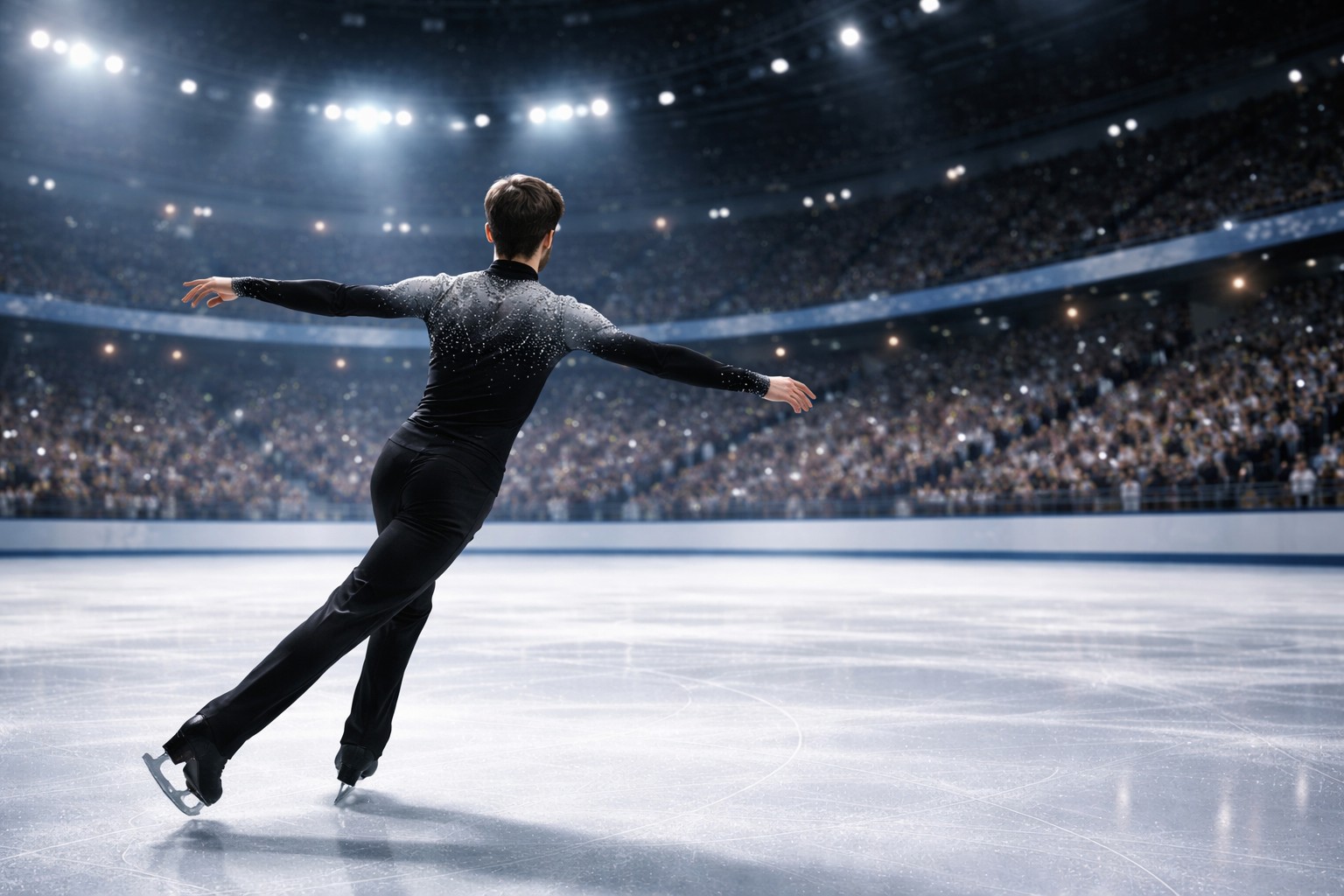
- Gold will be decided in the Free Skate: the final result is the combined total of Short Program + Free Skate.
- Margin is small enough to flip: a 4–6 point gap after the Short Program can disappear with one major error in the Free Skate.
- Winning blueprint: a quad-heavy layout only wins if the landings are clean enough to earn positive GOE.
- Most expensive mistakes: a fall plus negative GOE/flow losses can swing 5–8 points at the top.
- Judging swing factor: when TES is close, PCS can decide the title with a several-point difference.
- Realistic gold pool is small: expect a head-to-head battle at the top; everyone else needs a chaos scenario.
- What to watch first: the early jumping pass sequence—if the top contender misses there, the whole podium picture changes.
Official references: Olympics.com – Milano Cortina 2026
Date & start time
The men’s Free Skate is scheduled for February 13, 2026, as the medal-deciding evening session in Milan. Final standings are determined by the combined total of Short Program + Free Skate.
What matters most in the Free Skate
- TES: Base value + GOE determine technical separation.
- PCS: Skating skills and performance can swing tight battles.
- Execution over difficulty: Clean quads outperform risky attempts with negative GOE.
- Error cost: Falls and under-rotations can swing 5–8 points instantly.
The Olympic title will most likely be decided between Ilia Malinin and Yuma Kagiyama, with Adam Siao Him Fa positioned as the primary pressure factor. All other contenders would require a significant mistake in the leading group.
Malinin owns the highest technical ceiling in the field. A clean Free Skate with four or more quads executed with positive GOE would force the competition toward perfection.
Risk factor: early under-rotations or a fall on a high-value quad can instantly erase the projected scoring advantage.
Kagiyama’s path to gold runs through precision and skating skills. Clean landings combined with strong component scores can close any small gap created through base value.
His gold scenario requires near-flawless execution combined with a visible technical error from Malinin.
Siao Him Fa remains within realistic medal contention but would need both a high-scoring performance and significant mistakes from the top two contenders.
Official event information: Olympics.com – Milano Cortina 2026 Figure Skating
In modern Olympic men’s figure skating, gold typically requires a total score in the 295–310 range. That usually translates into a Free Skate between 185 and 200 points, depending on the Short Program result. Anything below that opens the door.
| Scenario | Free Skate Range | Gold Probability |
|---|---|---|
| Clean quad layout | 195–200+ | Very high |
| One major mistake | 185–192 | Title at risk |
| Multiple visible errors | Below 185 | Likely silver or bronze |
Key insight: The Olympic title will not be decided by the number of quads attempted, but by how efficiently they are executed. Positive GOE on four clean quads can outscore five with shaky landings.
Scenario 1: The technical favorite delivers (most likely)
A clean quad layout with strong positive GOE keeps the leader in control. If the planned technical content is executed efficiently, the existing margin from the Short Program becomes decisive. In this case, the gold medal goes to the skater with the highest scoring ceiling.
Scenario 2: One major mistake flips the podium (realistic)
A fall or clear under-rotation on an early quad costs several points and shifts pressure immediately. The challenger capitalizes with a near-clean performance built on execution and PCS efficiency. The Olympic title changes hands on quality, not quantity.
Scenario 3: Chaos in the final flight (unlikely but possible)
Multiple visible errors among the top contenders open the door for the third-ranked skater. In this case, stability becomes the decisive asset. The gold medal goes not to the most ambitious layout, but to the cleanest overall performance under pressure.
Overall assessment: The most probable outcome remains a direct duel decided by execution quality. The margin is narrow enough to keep the final volatile, but large enough that only a visible mistake is likely to change the Olympic champion.
When is the men’s Free Skate at the 2026 Olympics?
The men’s Free Skate is scheduled for February 13, 2026, in the evening medal session in Milan.
How is the Olympic champion determined?
The final ranking is based on the combined total score from the Short Program and the Free Skate. The skater with the highest overall score wins the Olympic gold medal.
What score usually wins Olympic gold in men’s figure skating?
In recent Olympic cycles, a total score in the 295–310 range has typically been enough to secure gold, depending on the technical level of the competition.
Do more quads automatically mean gold?
Not necessarily. While quads increase base value, the decisive factor is execution. Clean landings with positive GOE can outweigh a more ambitious but error-prone layout.
Who are the main gold contenders heading into the Free Skate?
The most realistic gold battle is between Ilia Malinin and Yuma Kagiyama, with Adam Siao Him Fa positioned as the primary challenger if mistakes occur.