
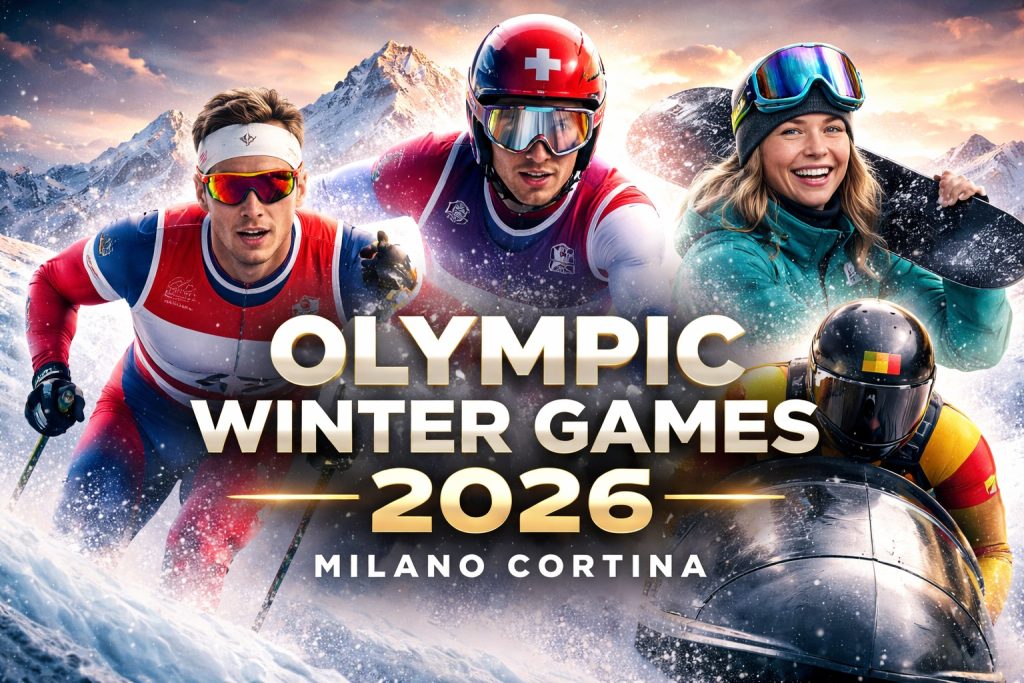
What Defines a True Olympic Gold Favorite?
An Olympic gold favorite is not defined by hype or short-term results. The most reliable indicator is repeatability under Olympic conditions. At the Winter Games, gold medals are typically won by athletes or systems that have already proven they can peak on the sport’s biggest stage.
Beijing 2022 provides a clear benchmark. Athletes such as Johannes Høsflot Klæbo, Marco Odermatt, Chloe Kim and Francesco Friedrich did not win gold by chance. Each entered the Games as the dominant force in their discipline and converted that advantage into Olympic titles.
- Proven Olympic performance: previous medals and finals matter more than isolated World Cup wins.
- System advantage: equipment, infrastructure and team depth decide many winter sports.
- Low performance variance: dominant athletes fail less often under Olympic pressure.
- Event structure: multi-run or multi-heat formats favor established favorites.
Sports with heavy technical or equipment components tend to produce the most predictable gold outcomes. Men’s bobsleigh, women’s snowboard halfpipe and Nordic combined are recent examples. In contrast, disciplines such as biathlon, alpine slalom or ski jumping regularly disrupt favorite status, even for reigning world champions.
For Milano Cortina 2026, this distinction is decisive. Gold favorites can be identified in advance — but only in sports where dominance, systems and repeatable execution historically decide Olympic titles.
Beyond the competition itself, the structure and scale of the Milano Cortina Games also influence Olympic conditions, from venue planning to sustainability and regional economic impact. A detailed background analysis is available here: Milano Cortina 2026 – economy, sustainability and tourism .
Nations Most Likely to Win Gold in 2026
Olympic winter gold is not evenly distributed. A small group of nations consistently dominates the gold medal table. Beijing 2022 reinforced this pattern — and Milano Cortina 2026 is expected to follow the same structure.
Norway
16 Gold Medals (Beijing 2022)The most dominant winter nation of the last Olympic cycle. Norway’s gold production is built on endurance and technical depth in cross-country skiing, biathlon and Nordic combined.
- Key athletes: Johannes Høsflot Klæbo, Jarl Magnus Riiber
- Gold boost factor: Possible return of Therese Johaug
Germany
12 Gold Medals (Beijing 2022)Germany’s gold profile is highly concentrated. Sliding sports remain the backbone of its Olympic success, especially in multi-run formats where systems and equipment matter most.
- Core sports: Bobsleigh, luge, skeleton
- Key athletes: Francesco Friedrich, Johannes Lochner
United States
Athlete-driven gold modelThe U.S. relies less on system dominance and more on individual superstars. Gold potential is concentrated in snowboarding, freestyle skiing and speed skating.
- Key athletes: Chloe Kim, Mikaela Shiffrin, Jordan Stolz
- Risk factor: Higher variance in technical and single-run events
Canada
Freestyle & Team SportsCanada’s gold chances are strongest in freestyle disciplines and ice hockey. The overall ceiling depends heavily on athlete form and NHL participation.
- Key athletes: Marielle Thompson, Brendan Mackay
- X-factor: Connor McDavid if NHL players are released
Switzerland
Alpine Gold AnchorSwitzerland’s gold outlook is tightly linked to alpine skiing. One athlete defines the entire medal expectation.
- Key athlete: Marco Odermatt
- Reality check: Limited gold depth beyond alpine events
The Most Predictable Gold Events
Some Olympic gold medals are easier to forecast than others. This section focuses on events where results tend to repeat across Olympic cycles, because dominance, equipment or competition format reduce randomness.
“Predictable” does not mean guaranteed. It means that the same athletes or programs appear on the podium again and again — and surprises are the exception, not the rule.
Men’s Bobsleigh (2-man & 4-man)
Bobsleigh is decided over multiple runs, not a single moment. This rewards teams with the best equipment, start technique and consistency. As a result, gold medals are rarely random.
- Benchmark name: Francesco Friedrich
- Main challenger: Johannes Lochner
- Gold decider: start speed and error-free runs across all heats
Women’s Snowboard Halfpipe
While judged sports can be volatile, this event is dominated by very few athletes capable of landing the highest-difficulty runs under Olympic pressure.
- Benchmark name: Chloe Kim
- Why predictable: clear technical gap to most competitors
- Gold decider: clean landing of maximum-difficulty tricks
Nordic Combined
Nordic combined rewards athletes who control both parts of the competition: ski jumping position and pacing in the cross-country pursuit. This favors dominant all-rounders over one-day specialists.
- Benchmark name: Jarl Magnus Riiber
- Why predictable: ability to manage races from the front
- Gold decider: jump result and controlled pace in pursuit
Alpine Skiing (Selected Disciplines)
Alpine skiing is not predictable across the board. However, when one athlete dominates multiple disciplines with low error rates, gold becomes easier to forecast in specific events.
- Benchmark name: Marco Odermatt
- Why conditionally predictable: dominance plus consistency
- Gold decider: clean execution and course suitability
In these events, Olympic gold is usually decided by dominance and repetition. That is why the same names — Friedrich, Kim, Riiber and Odermatt — remain central to the gold forecast for Milano Cortina 2026.
High-Volatility Events: Where Olympic Gold Is Wide Open
Not all Olympic gold medals follow predictable patterns. In some sports, even the best athletes fail regularly, because a single mistake, changing conditions or competition format can overturn expectations within seconds.
This section focuses on events where favorites exist, but where Olympic gold is often decided on the day — not by long-term dominance alone.
Biathlon
Biathlon combines physical endurance with precision shooting. Even dominant athletes lose gold due to shooting errors, especially in individual Olympic races.
- Top names: Johannes Thingnes Bø, Elvira Öberg
- Why volatile: penalties turn seconds into minutes
- Gold decider: final shooting stage under pressure
Alpine Skiing (Slalom & Giant Slalom)
Technical alpine events are decided in two runs, but still carry a high risk of disqualification. Even the strongest favorites regularly fail to finish.
- Top names: Mikaela Shiffrin, Marco Schwarz
- Why volatile: high DNF rate at Olympic intensity
- Gold decider: clean second run under pressure
Ski Jumping
Ski jumping is extremely sensitive to wind and timing. Minor delays or gate changes can reshape the entire competition, even for Olympic champions.
- Top names: Stefan Kraft, Ryoyu Kobayashi
- Why volatile: wind compensation and gate adjustments
- Gold decider: stable conditions across both rounds
Short Track Speed Skating
Short track is defined by pack racing. Falls, penalties and tactical collisions are common, making Olympic gold highly unpredictable.
- Top names: Hwang Dae-heon, Suzanne Schulting
- Why volatile: contact, penalties and race incidents
- Gold decider: positioning and split-second decisions
In these events, Olympic gold is rarely controlled from start to finish. Even dominant athletes can lose due to one mistake, one shot or one gust of wind. That is why surprises are most common here.
Global Superstars to Watch in Milano Cortina 2026
name-driven shortlistThis is a tight, evidence-based shortlist: athletes with proven Olympic winning ability and clear gold pathways in 2026. Each card answers one question: why this athlete can realistically win gold in Milano Cortina.
- Gold case: discipline dominance + low error rate compared to most alpine contenders.
- Best gold routes: selected alpine events where consistency beats risk-taking.
- Main risk: alpine DNFs — one mistake ends the medal race.
- Gold case: sprint and team formats reward his finishing speed and race control.
- Best gold routes: sprint, team sprint, relay-dependent opportunities.
- Main risk: tactical isolation in distance races against Norway’s own depth and rivals.
- Gold case: when shooting is clean, speed separates him from the field.
- Best gold routes: races where pace can compensate for small shooting errors.
- Main risk: one bad shooting stage can erase gold instantly.
- Gold case: a small group can match her top-end difficulty when she lands clean.
- Best gold routes: halfpipe finals where execution under pressure is decisive.
- Main risk: one missed landing removes any margin immediately.
- Gold case: proven ability to win across multiple freestyle events at Olympic level.
- Best gold routes: events where difficulty + execution score highest.
- Main risk: judged-sport volatility and landing consistency.
- Gold case: multi-run format rewards consistency, equipment quality and start execution.
- Best gold routes: 2-man and 4-man bobsleigh.
- Main risk: tiny errors compound over heats; direct rivalry inside the same program.
- Gold case: top-end technique and proven championship performance.
- Best gold routes: individual hill events.
- Main risk: wind windows and timing can reshape results within minutes.
- Gold case: unmatched technical base when she skis clean in slalom/GS-style settings.
- Best gold routes: technical events where precision beats raw risk.
- Main risk: DNF probability in high-pressure second runs.
- Gold case: if NHL players participate, Canada’s top-end talent becomes decisive.
- Best gold routes: tournament performance in knockout rounds.
- Main risk: Olympic participation rules + single-game elimination volatility.
Use it as a “gold backbone” for 2026: athletes with repeatable winning profiles. In volatile sports (biathlon, ski jumping, technical alpine), treat them as top contenders — not guarantees.
Repeat Champions vs. New Gold Faces
two pathways to goldMilano Cortina 2026 gold medals will largely come from two groups: repeat champions (athletes with proven Olympic-winning profiles) and new gold faces (dominant today, but not yet Olympic gold winners). This split is practical: repeat champions are easier to forecast, while first-time winners add most of the “new gold” in the medal table.
These athletes already converted elite form into Olympic gold. In sports with multi-run formats, repeat champions tend to stay at the top because execution is repeatable and “randomness” is limited.
| Athlete | Sport | Why gold is repeatable | Most direct risk |
|---|---|---|---|
| Francesco Friedrich | Bobsleigh | multi-run format + equipment/system edge + proven conversion at Olympics | small errors compounding across heats; internal rivalry |
| Chloe Kim | Snowboard Halfpipe | difficulty ceiling + history of landing top runs under Olympic pressure | one missed landing removes margin instantly |
| Eileen Gu | Freestyle Skiing | multi-event medal paths + proven Olympic execution in judged formats | landing consistency and judging volatility |
These athletes project as gold contenders because of sustained top-level performance in the current cycle, but Olympic formats or volatility can still block a first title. This group often decides whether the 2026 medal table looks “new” or “recycled.”
- Gold pathway: conversion of dominance into one perfect Olympic race.
- Why not guaranteed: tiny margins; one suboptimal pacing decision costs medals.
- Gold pathway: controlling jump position and pursuit race pace.
- Why not guaranteed: conditions and health timing can swing outcomes quickly.
- Gold pathway: speed advantage plus controlled shooting.
- Why not guaranteed: penalties can erase a lead in one shooting stage.
- Gold pathway: discipline dominance with unusually low error rate.
- Why not guaranteed: alpine DNFs remain the hard stop in any Olympic forecast.
If you want the most stable gold predictions, follow the repeat champions. If you want the events that can reshape the 2026 medal table, watch the first-time gold candidates.
Who Could Top the Gold Medal Table?
tier-based outlookPredicting exact medal counts is unreliable at the Winter Games. A tier-based outlook is more accurate: it reflects structural strength, depth of gold-capable athletes and the number of events where dominance is repeatable.
- Norway – unmatched depth in cross-country skiing, biathlon and Nordic combined; multiple independent gold pathways through Johannes Høsflot Klæbo and Jarl Magnus Riiber.
- Germany – most stable gold producer in sliding sports; bobsleigh, luge and skeleton provide repeatable multi-run medal routes led by Francesco Friedrich.
- United States – gold output depends on conversion by superstars like Chloe Kim, Mikaela Shiffrin and Jordan Stolz; ceiling high, variance significant.
- Canada – freestyle skiing and snowboard offer gold chances; ice hockey becomes decisive if NHL players participate.
- Switzerland – gold outlook largely defined by Marco Odermatt in alpine skiing; limited depth beyond this core.
- Austria – alpine skiing remains the primary gold channel, but competition density reduces predictability.
- China – targeted freestyle and short-track projects; gold potential concentrated in a small number of events led by Eileen Gu.
The gold medal table in Milano Cortina 2026 will likely be decided at the top by structural depth, not surprise runs. Norway and Germany enter with the clearest advantage, while the United States and Canada depend heavily on superstar conversion.
Final Takeaway: What Will Decide Gold in 2026
5-point summaryMilano Cortina 2026 will not be decided by “overall form” or vague momentum. Gold outcomes will hinge on a small set of repeatable factors — and in most cases, on a small set of names.
Norway and Germany enter with the clearest structural advantage, while the United States and Canada depend most on superstar conversion.
Multi-run formats and equipment-heavy events reduce randomness. That’s why names like Francesco Friedrich remain central to any gold forecast.
Biathlon, technical alpine events, ski jumping and short track regularly break predictions. Even elite names like Johannes Thingnes Bø or Mikaela Shiffrin can lose gold due to one mistake.
If they execute, athletes like Marco Odermatt, Johannes Høsflot Klæbo and Chloe Kim can decide entire medal narratives on their own.
Ice hockey outcomes depend heavily on roster availability. If NHL players participate, Canada’s ceiling rises — and stars like Connor McDavid become decisive.
Milano Cortina 2026 gold will be decided by structural depth in predictable events — and by execution on the day in volatile ones.
Frequently Asked Questions about Olympic Winter Games 2026
Which nations are expected to win the most gold medals in 2026?
Norway and Germany enter the Olympic Winter Games 2026 with the strongest structural advantage. Norway’s depth in cross-country skiing, biathlon and Nordic combined contrasts with Germany’s dominance in sliding sports such as bobsleigh, luge and skeleton.
Who are the biggest gold favorites at Milano Cortina 2026?
The most reliable gold favorites include Marco Odermatt in alpine skiing, Johannes Høsflot Klæbo in cross-country skiing, Chloe Kim in snowboard halfpipe and Francesco Friedrich in bobsleigh. All combine Olympic experience with repeatable dominance in their disciplines.
Which events are considered the most predictable for gold medals?
Events with multi-run formats or strong system influence are the most predictable. Men’s bobsleigh, Nordic combined and women’s snowboard halfpipe historically produce repeat champions more often than single-run or judged events.
Where are surprises most likely at the Olympic Winter Games?
Surprises occur most often in biathlon, alpine technical events, ski jumping and short track speed skating. In these disciplines, a single mistake, penalty or change in conditions can eliminate even the strongest gold favorite.
What will ultimately decide gold medals in Milano Cortina 2026?
Gold medals will be decided by two main factors: structural dominance in predictable events and flawless execution on the day in high-variance competitions. A small group of superstars is expected to shape a large share of the gold medal outcomes.