
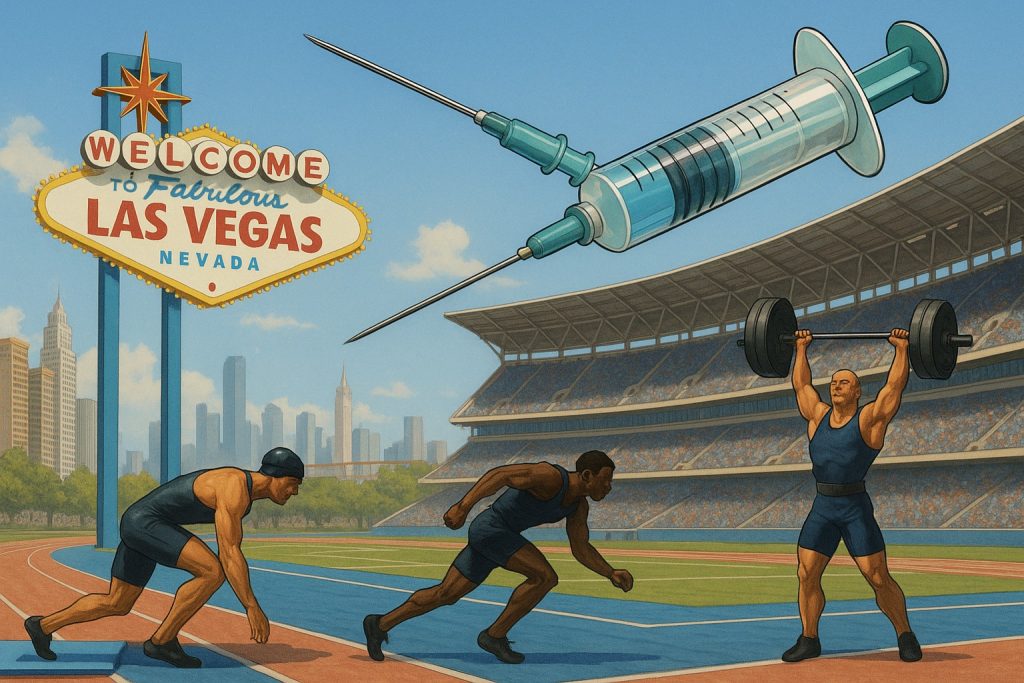
ENHANCED GAMES 2026
Enhanced Games 2026 Explained: Athletes, Rules and the Controversial “Doping Olympics”
The Enhanced Games 2026 in Las Vegas could become one of the most controversial sporting events of the decade. The concept is radical: performance-enhancing substances are expected to be allowed under medical supervision, challenging the traditional anti-doping system led by the IOC and WADA. Supporters call it a transparent and science-driven future for elite sport. Critics warn of a dangerous “Doping Olympics” that could put athletes’ health, fairness and the credibility of global sport at risk.
Date
The first Enhanced Games are planned for May 2026.
Location
Las Vegas, with Resorts World expected as the central venue.
Key Feature
Certain performance-enhancing substances may be allowed.
Prize Money
Organizers have promoted major financial incentives for athletes.
Enhanced Games 2026: Key Facts
- The Enhanced Games are planned as a privately organized elite sports event in Las Vegas.
- The event is expected to include swimming, track and field, and weightlifting.
- The format challenges the traditional anti-doping model used by Olympic sports.
- Supporters argue that supervised enhancement could be safer and more transparent.
- Critics warn of serious health risks and pressure on athletes to use drugs.
- IOC, WADA and major sports bodies have strongly criticized the concept.
- Records achieved at the Enhanced Games are unlikely to be recognized by traditional federations.
What are the Enhanced Games?
The Enhanced Games are a planned international sports event where certain performance-enhancing substances may be used under medical supervision. The concept is designed as a direct challenge to the traditional anti-doping system used in Olympic and federation-based sport.
Instead of banning enhancement outright, the organizers argue that controlled use, medical monitoring and transparency could create a safer and more honest model for elite performance. Critics strongly disagree and describe the project as a dangerous experiment with athletes’ bodies.
The core idea behind the Enhanced Games
- Controlled use of selected performance-enhancing substances
- Medical supervision instead of traditional anti-doping tests
- A strong focus on records, spectacle and measurable performance
- Private investment and major financial incentives for athletes
- Positioning as a “future of sport” alternative to Olympic competition
The project is closely associated with Australian entrepreneur Aron D’Souza and has received backing from investors in the tech and biotech sectors. Since its announcement, the Enhanced Games have triggered a global debate about ethics, fairness, health risks and the limits of human performance.
When and where are the Enhanced Games 2026?
The first Enhanced Games are planned for May 2026 in Las Vegas. Resorts World Las Vegas has been promoted as the central venue. The organizers are aiming for a highly produced entertainment-style sports event built for global media and streaming coverage.
Why Las Vegas?
Las Vegas fits the Enhanced Games concept because the city is built around spectacle, risk, entertainment and global attention. For an event designed to provoke debate and generate viral moments, the location is part of the message.
The biggest open questions remain the final athlete roster, the level of broadcast interest and how strongly traditional sports bodies will react once the event moves closer to its launch.
Which sports and rules are planned?
The first edition of the Enhanced Games is expected to focus on swimming, track and field, and weightlifting. These sports were likely chosen because performance gains can be measured clearly through times, distances, weights and records.
Swimming
Sprint and short-distance races are expected to be central to the program.
Track and field
Sprint and explosive power events are likely to attract the most attention.
Weightlifting
Maximum strength and visible performance gains fit the event’s core concept.
Unlike Olympic competition, the Enhanced Games are not expected to use standard anti-doping rules. Instead, organizers have promoted a model based on medical screening, athlete autonomy and controlled performance enhancement.
The biggest difference from the Olympics
Olympic sport bans performance-enhancing drugs. The Enhanced Games want to allow selected forms of enhancement under medical supervision. That single difference is what makes the project so explosive.
Which substances could be allowed?
One of the biggest controversies surrounding the Enhanced Games is the question of which performance-enhancing substances athletes may be allowed to use. Organizers describe the concept as a medically supervised and science-based alternative to traditional anti-doping systems, but many details remain unclear.
Instead of banning enhancement entirely, the project promotes the idea of controlled performance optimization with health monitoring, medical screening and transparency. Critics argue that even under supervision, the risks could be enormous.
What is currently known
- Certain enhancement methods may be permitted under medical supervision.
- The organizers emphasize athlete monitoring and health checks.
- Traditional anti-doping controls are not expected to be the central focus.
- Complete public rulebooks have not yet been fully released.
- The line between “allowed enhancement” and dangerous abuse remains highly controversial.
Public discussions around the event often focus on substances such as testosterone, EPO, anabolic compounds and growth hormones. However, the exact framework and medical limits remain only partially transparent.
The central debate
Supporters claim supervised enhancement could reduce hidden abuse and make elite sport more transparent. Opponents argue the event could normalize dangerous drug use and push athletes toward increasingly extreme physical risks.
Which athletes could compete?
As the planned launch approaches, the final athlete lineup for the Enhanced Games remains unclear. Organizers have promoted the idea of attracting elite competitors from swimming, track and field and weightlifting, but only limited public confirmations have emerged so far.
Much of the speculation focuses on former professional athletes, suspended competitors or individuals who openly criticize the current anti-doping system. At the same time, many active athletes may avoid the event because of potential sanctions, sponsorship concerns or damage to their public image.
Swimming
Sprint-focused athletes are considered the most likely participants.
Track and field
Explosive sprint and power events are expected to dominate attention.
Weightlifting
Strength sports are viewed as especially compatible with the concept.
A major question remains whether recognizable international stars will actually compete publicly. Without well-known names, critics argue the event could struggle to gain long-term credibility and mainstream sports attention.
Why athlete participation matters
The success or failure of the Enhanced Games may depend heavily on whether recognizable elite athletes are willing to publicly associate themselves with the project despite criticism from major sports organizations.
Why are the Enhanced Games so controversial?
Few sports projects in recent years have triggered reactions as intense as the Enhanced Games. Supporters describe the concept as a transparent and science-driven alternative to traditional anti-doping systems. Critics call it a dangerous experiment that could permanently damage elite sport.
The central controversy is simple: instead of banning performance-enhancing substances completely, the event proposes allowing certain forms of enhancement under medical supervision. Opponents warn this could create enormous pressure on athletes to push their bodies beyond safe limits.
Health concerns
Critics warn about cardiovascular risks, hormonal damage and unknown long-term effects.
Fairness
Many experts believe the concept undermines equal competition in sport.
Global impact
Opponents fear consequences for youth sport and international anti-doping systems.
The question dividing the sports world
Are the Enhanced Games an honest acknowledgment of how elite sport already works behind the scenes — or the beginning of a dangerous new era of medically optimized competition?
IOC and WADA criticism
International sports organizations have reacted aggressively to the Enhanced Games. Both the International Olympic Committee (IOC) and the World Anti-Doping Agency (WADA) strongly oppose the project and warn about serious risks for athletes and global sport.
Sports officials argue that allowing enhancement publicly could weaken decades of anti-doping policy and damage the credibility of international competition. The project is viewed by many federations as a direct challenge to the foundations of Olympic sport.
Athletes who participate in the Enhanced Games could also face serious consequences within traditional sports structures, including suspensions, exclusion from Olympic competition or conflicts with national federations.
Why the reaction has been so intense
The Enhanced Games are not simply another sports event. For many federations, they represent a direct challenge to the global anti-doping system that has shaped elite competition for decades.
Could the Enhanced Games change elite sport forever?
It remains unclear whether the Enhanced Games will become a lasting sports property or collapse under criticism and political pressure. However, the project has already succeeded in forcing a global debate about enhancement, athlete autonomy and the future of elite performance.
Supporters argue that modern sport already operates in a gray zone of recovery science, advanced medicine and hidden enhancement. Critics believe openly accepting enhancement could permanently shift expectations for athletes and normalize dangerous behavior.
Growth potential
Huge prize money and global attention could attract more athletes in the future.
Risk of failure
Public backlash, legal pressure and missing star athletes could hurt the event.
Long-term impact
The debate around enhancement and athlete autonomy is unlikely to disappear.
What will decide the future of the Enhanced Games?
The project’s long-term success will likely depend on three things: athlete participation, media attention and whether sponsors and audiences are willing to accept enhancement as part of elite sport.
Conclusion: The Enhanced Games could permanently reshape elite sport
The Enhanced Games 2026 are far more than just another sporting event in Las Vegas. The project openly challenges the foundations of the modern anti-doping system and has already sparked one of the biggest debates in international sport about fairness, health risks and human performance enhancement.
Supporters see the concept as a transparent and science-driven alternative to a system they believe already operates in secrecy. Critics argue that the event could normalize dangerous drug use, increase pressure on athletes and permanently damage the credibility of elite competition.
Whether the Enhanced Games become a long-term global sports property or collapse under criticism remains uncertain. What is already clear, however, is that the project has forced the sports world to confront uncomfortable questions about performance, ethics and the future of competition.
FAQ about the Enhanced Games 2026
What are the Enhanced Games?
The Enhanced Games are a planned sports competition where certain performance-enhancing substances may be allowed under medical supervision.
When will the Enhanced Games 2026 take place?
The event is currently planned for May 2026 in Las Vegas.
Which sports are expected at the Enhanced Games?
Organizers have focused mainly on swimming, track and field, and weightlifting.
Are steroids and doping substances allowed?
The organizers plan to allow certain forms of performance enhancement under medical supervision, although the complete rules have not been fully published.
Why are IOC and WADA criticizing the event?
Both organizations warn about health risks, fairness issues and the possible normalization of performance-enhancing drug use in elite sport.
Will records from the Enhanced Games be officially recognized?
Records achieved at the Enhanced Games are unlikely to be recognized by traditional international sports federations.